01
(a)
Q1, SAFE,
(b)
Q1, SAFE,
(c)
Q2, UNSAFE,
(d)
Q2, UNSAFE,
02
(a)
(b)
Use
So:
This is a circle centered at
(c)
Using
Note: This assumes that
03
Observe that this parametric curve is a circle centered at
Treat
Then
Also
To find vertical tangents, solve for
Check that
Now find the Cartesian coordinates for these points:
To find the horizontal tangents, solve for
Check that
Now find the Cartesian coordinates for these points:
04
(a)
(b)
Method 1:
First compute
Method 2:
Observe
(c)
(d)
05
(a)
(a)
Insert
(b)
(c)
06
(a)
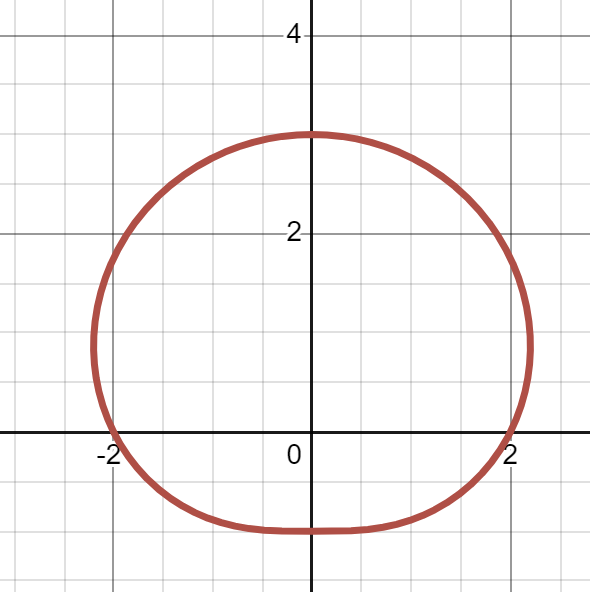
(b)
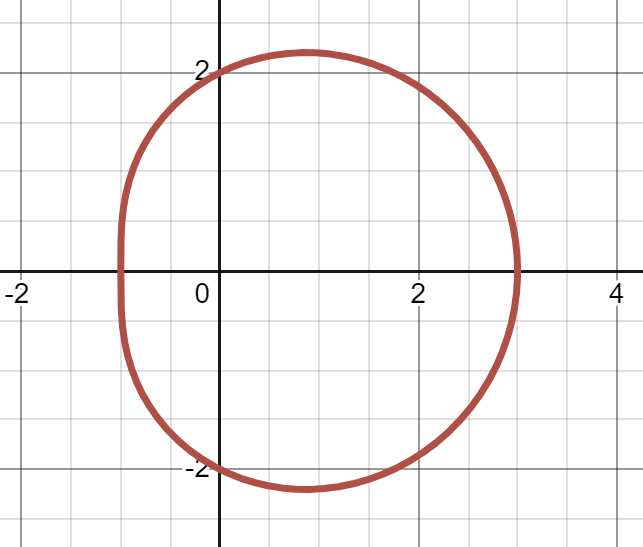
(c)
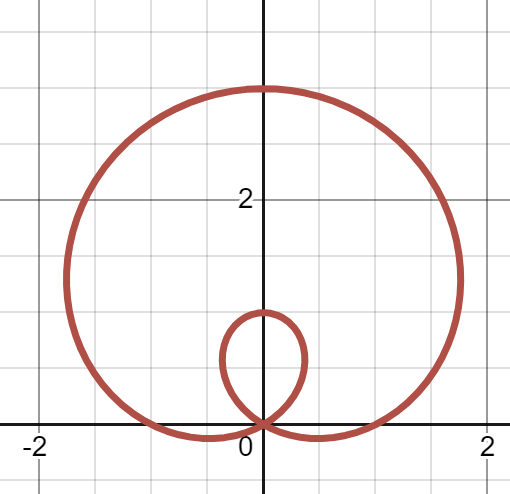
(d)
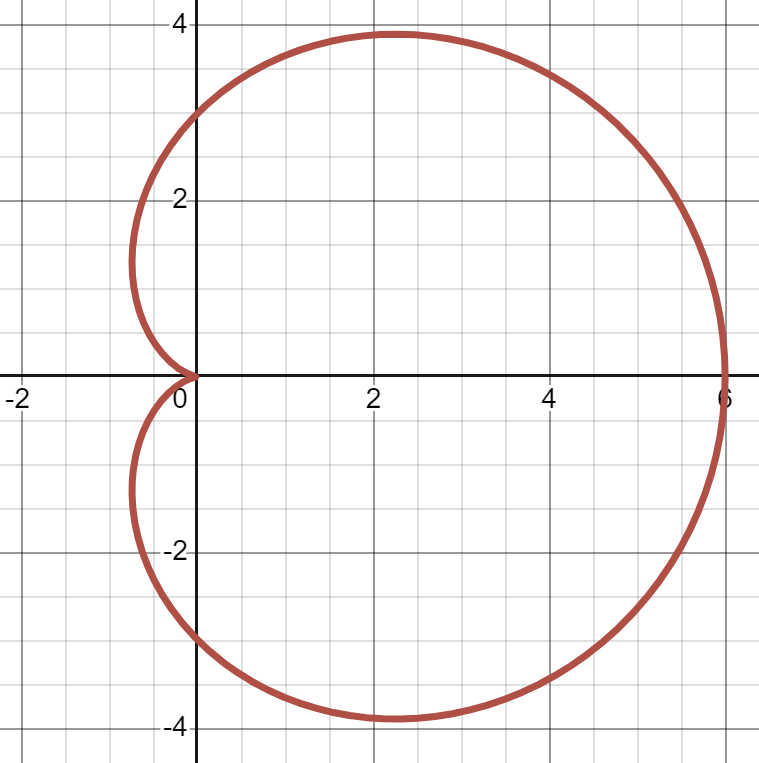
07
(a)
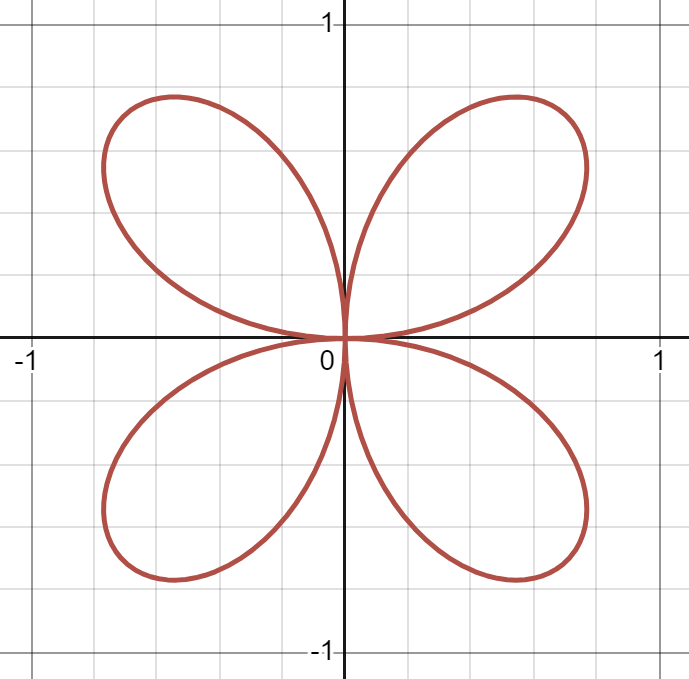
Numbers should be placed on the loops, 1, 2, 3, 4, starting in Q1 and going clockwise.
(b)
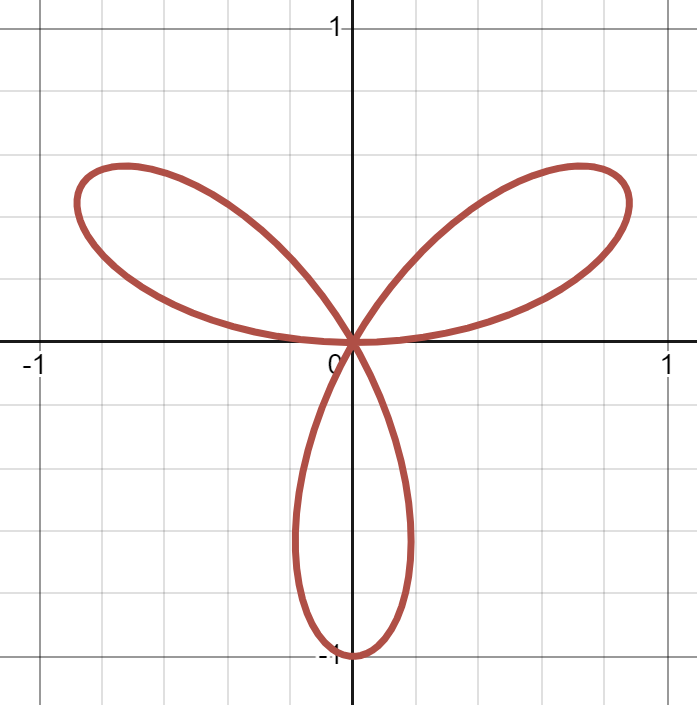
Numbers should be placed on the loops, 1, 2, 3, starting in Q1 and going clockwise.
(c)
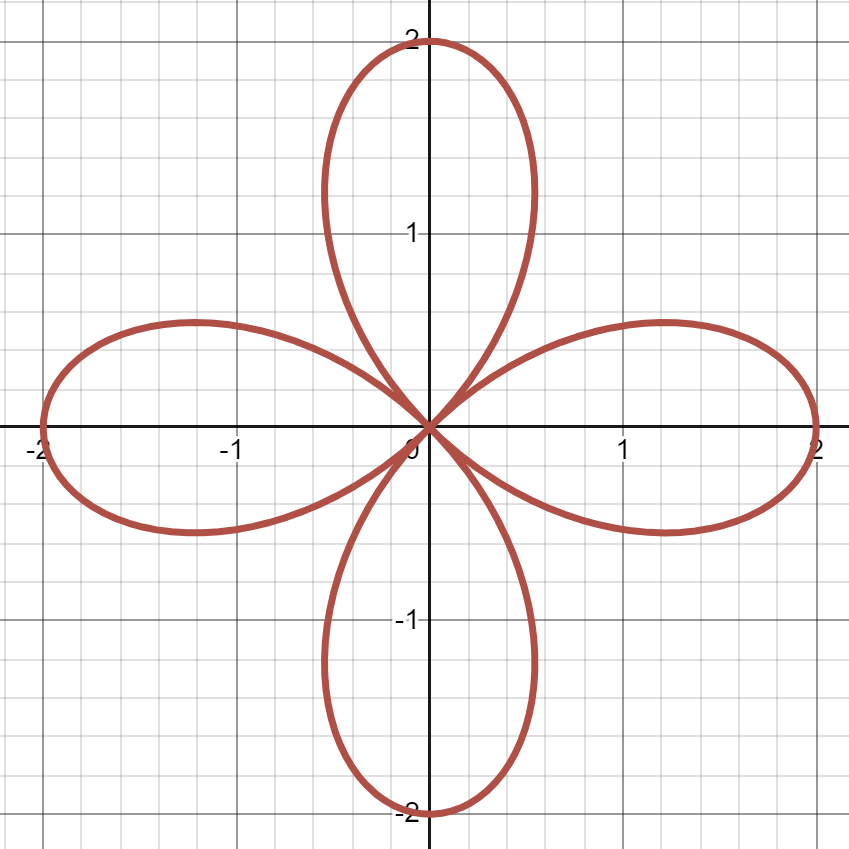
Numbers should be placed on the loops, 1, 2, 3, 4, starting on the
08
Derivatives:
Speed function:
Now we minimize this function as in Calc I.
Method 1:
Differentiate:
This equals zero if-and-only-if the numerator equals zero (assuming the denominator is not zero there):
Since
Method 2:
Instead of differentiating
09
(a)
One arch is formed from the range
Compute
Therefore
Now recall a power-to-frequency formula, and use it in reverse:
Therefore:
(b)